
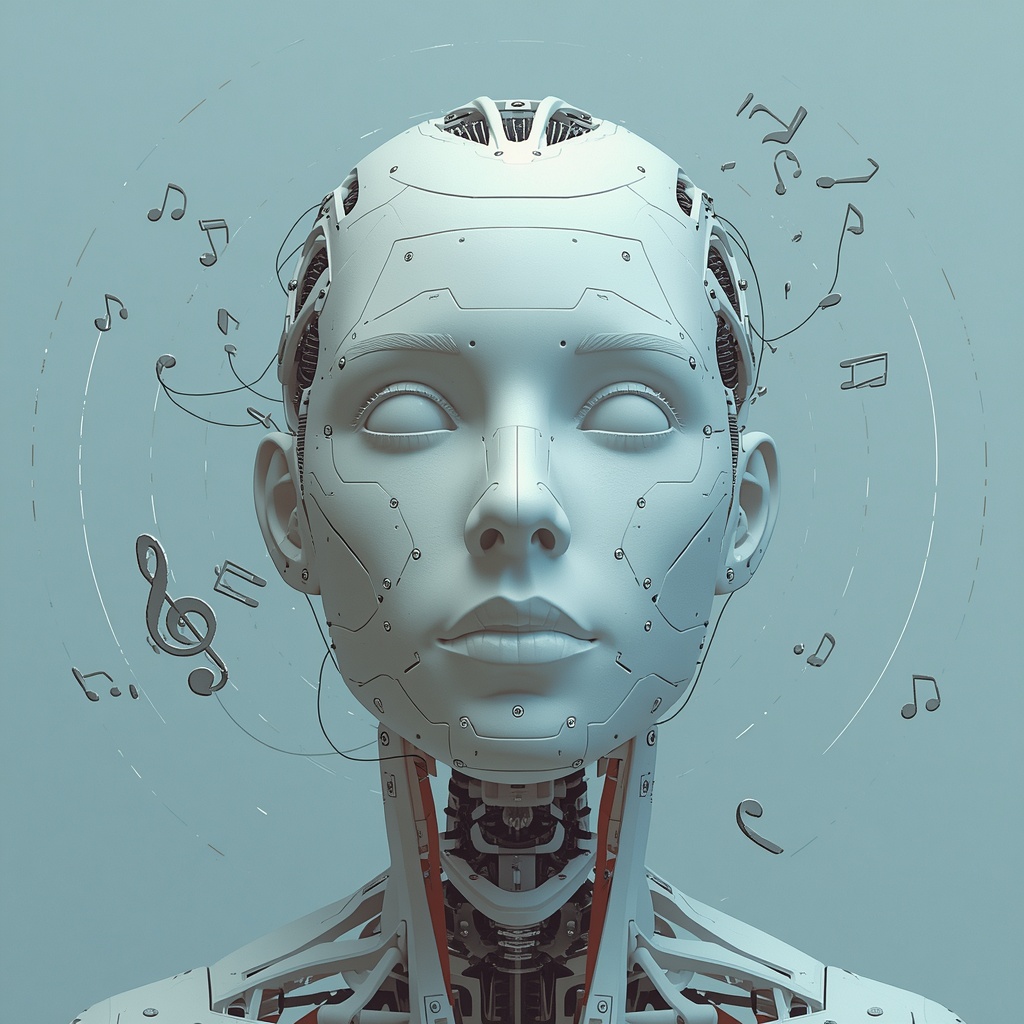
с помощью искусственного интеллекта
1. Введение – Вступление в геополитическую эру искусственного интеллекта
Искусственный интеллект стремительно превращается из технологической возможности в один из определяющих стратегических активов XXI века.
В то время как правительства, корпорации и исследовательские институты продолжают вкладывать беспрецедентные ресурсы в искусственный интеллект, технологии, связанные с творчеством и цифровыми медиа, становятся не менее важными инструментами геополитического влияния.
Музыка, традиционно рассматриваемая как культура и развлечение, все чаще становится стратегическим цифровым активом, экономическая, социальная и дипломатическая ценность которого продолжает расти.
Глобальный баланс сил больше не определяется исключительно военной мощью или экономическим производством. Цифровая инфраструктура, вычислительные мощности, доступ к высококачественным наборам данных и возможность разработки все более совершенных систем искусственного интеллекта теперь определяют конкурентоспособность стран.
Страны, успешно интегрирующие ИИ в свои креативные индустрии, укрепляют не только свою внутреннюю экономику, но и свое международное культурное влияние и технологический суверенитет.
Музыка занимает уникальное место в этой трансформации. Она преодолевает языковые и культурные барьеры эффективнее, чем практически любая другая форма коммуникации.
По мере того как искусственный интеллект становится способным сочинять, исполнять, анализировать, персонализировать и распространять музыку в огромных масштабах, эта технология открывает возможности, выходящие далеко за рамки индустрии развлечений.
Музыка, созданная с помощью искусственного интеллекта, оказывает все большее влияние на образование, здравоохранение, военную подготовку, цифровой маркетинг, игры, кинопроизводство, виртуальные среды и взаимодействие человека с компьютером.
Эта конвергенция представляет собой скорее стратегический сдвиг, чем простую технологическую тенденцию. Музыкальные системы на базе искусственного интеллекта генерируют огромные объемы поведенческих данных, обеспечивая высоко персонализированный пользовательский опыт и одновременно поддерживая рекомендательные системы, цифровую рекламу, эмоциональный анализ и анализ потребительских предпочтений.
Для правительств эти возможности способствуют укреплению национальной «мягкой силы», развитию публичной дипломатии, повышению культурной устойчивости и цифровой конкурентоспособности.
Стратегические последствия становятся все более значительными по мере того, как генеративные модели ИИ превращаются в автономных агентов ИИ, способных планировать творческие рабочие процессы, вести переговоры по цифровому лицензированию, координировать производство мультимедийного контента и взаимодействовать как с людьми, так и с программными экосистемами.
Таким образом, музыка становится частью гораздо более широкой экосистемы искусственного интеллекта, где пересекаются творчество, экономика, кибербезопасность, интеллектуальная собственность и цифровое управление.
Глобальная конкуренция вокруг ИИ ускоряется во всех основных технологических областях. Страны, инвестирующие на ранних этапах в развитие креативной инфраструктуры с использованием ИИ, скорее всего, выиграют от более сильных инновационных экосистем, более ценных портфелей интеллектуальной собственности и большего международного влияния.
Те, кто не сможет адаптироваться, рискуют стать зависимыми от зарубежных платформ искусственного интеллекта, зарубежных наборов данных и внешних цифровых экосистем, которые все чаще определяют глобальные информационные потоки.
Поэтому для руководителей предприятий, политиков и стратегических консультантов искусственный интеллект и музыка должны рассматриваться не просто как эволюция искусства, но и как компонент национальной конкурентоспособности и долгосрочной технологической устойчивости.
Организации, которые сегодня осознают важность этого перехода, будут лучше подготовлены к формированию цифровой экономики завтрашнего дня, а не просто к реагированию на нее.
2. Стратегическое значение музыки в эпоху искусственного интеллекта
Музыка значительно эволюционировала, выйдя далеко за рамки простого развлечения. В эпоху искусственного интеллекта она стала стратегическим цифровым активом, влияющим на культуру, экономику, образование, дипломатию, оборонные коммуникации и конкурентоспособность страны.
По мере того как искусственный интеллект трансформирует глобальную цифровую экосистему, музыка все чаще функционирует как структурированные данные, которые можно анализировать, генерировать, оптимизировать и персонализировать в беспрецедентных масштабах.
Для правительств, транснациональных организаций и технологических компаний музыка, созданная с помощью ИИ, представляет собой нечто большее, чем просто автоматизацию творчества. Она открывает новые возможности в области цифрового суверенитета, управления интеллектуальной собственностью, сохранения национального культурного наследия, психологических операций, взаимодействия человека и машины и экономического роста.
Страны, которые займут лидирующие позиции в области креативных технологий, основанных на искусственном интеллекте, могут получить значительное влияние в формирующейся цифровой экономике.
Сама музыкальная индустрия генерирует огромные объемы структурированных и неструктурированных данных. Информация о поведении пользователей при потоковой передаче, эмоциональные реакции, демографические данные аудитории, сведения о лицензировании, производственные процессы и метаданные об авторских правах в совокупности образуют одно из крупнейших в мире хранилищ данных о потребительских предпочтениях.
Искусственный интеллект преобразует эти наборы данных в прогнозную информацию, способную предсказывать рыночный спрос, выявлять культурные тенденции, оптимизировать системы рекомендаций и поддерживать принятие стратегических решений.
Эта трансформация выходит далеко за рамки коммерческой музыки.
Медицинские организации все чаще изучают возможность применения музыкотерапии с помощью искусственного интеллекта для поддержки неврологической реабилитации, снижения стресса, восстановления когнитивных функций и инициатив в области психического здоровья. Образовательные учреждения исследуют возможность создания персонализированной музыки, адаптирующейся к индивидуальным стилям обучения.
Исследователи из оборонной отрасли изучают адаптивные звуковые среды для моделирования, обучения и повышения когнитивных способностей. В конечном итоге, в «умные города» можно будет интегрировать звуковые ландшафты, созданные с помощью ИИ, в транспортные системы, общественную инфраструктуру и стратегии обеспечения благополучия в городах.
Искусственный интеллект коренным образом меняет способы создания музыки.
Вместо месяцев ручной работы по созданию музыки, передовые модели генеративного искусственного интеллекта могут за считанные минуты создавать оркестровые партитуры, саундтреки к фильмам, многоязычные вокальные выступления, фоновую музыку, музыку для рекламы или персонализированные аудиопроизведения.
Эти системы изучают статистические взаимосвязи между мелодией, гармонией, ритмом, инструментальным сопровождением, эмоциями и вовлеченностью слушателя, что позволяет создавать все более сложные произведения.
Системы искусственного интеллекта следующего поколения идут еще дальше.
Ожидается, что автономные агенты ИИ будут самостоятельно управлять целыми процессами создания творческой продукции. Вместо того чтобы создавать единую композицию, агент ИИ может анализировать предпочтения аудитории, сочинять музыку, генерировать тексты песен, обрабатывать вокал, мастерить записи, распространять контент по платформам, оптимизировать маркетинговые кампании, отслеживать показатели вовлеченности, вести переговоры по лицензионным соглашениям и постоянно улучшать будущие релизы с помощью обучения с подкреплением.
Этот сдвиг представляет собой переход от автоматизации к автономным творческим экосистемам.
Крупные мультимодальные модели все чаще объединяют аудио, видео, текст, изображения, анимацию и интерактивные среды в единые рабочие процессы производства.
Музыка становится одним из компонентов комплексных цифровых решений, охватывающих виртуальную реальность, дополненную реальность, игры, образование, корпоративные коммуникации и интеллектуальных помощников.
Геополитические последствия также весьма значительны.
Музыка исторически выступала в качестве инструмента культурной дипломатии и международного влияния. Искусственный интеллект значительно ускоряет этот процесс. Страны, способные создавать многоязычный, адаптированный к культурным особенностям контент в глобальном масштабе, могут укрепить «мягкую силу», формировать международные нарративы и расширить экспорт цифровой культуры.
По мере того как цифровые платформы все больше ориентируются на искусственный интеллект, алгоритмическое влияние на потребление культурных продуктов может стать стратегически важным национальным инструментом.
Это поднимает фундаментальные вопросы, касающиеся цифрового суверенитета.
Кому принадлежит музыка, созданная с помощью ИИ?
Кто контролирует обучающие наборы данных?
В какой юрисдикции регулируется международное обеспечение соблюдения авторских прав?
Как правительствам следует регулировать использование искусственных голосов, идеально имитирующих голоса известных личностей или артистов?
Эти вопросы пересекаются с более широкими дискуссиями, касающимися управления ИИ, интеллектуальной собственности, политики в области конкуренции, кибербезопасности и международного права.
С экономической точки зрения, ИИ существенно снижает производственные затраты, одновременно повышая творческий потенциал.
Независимые создатели контента получают доступ к возможностям, ранее доступным только крупным студиям. Предприятия ускоряют производство мультимедийного контента для маркетинга, обучения, взаимодействия с клиентами и внутренней коммуникации.
Правительства могут с высокой эффективностью запускать образовательные и информационные кампании, созданные с помощью искусственного интеллекта, на нескольких языках.
Однако эти преимущества создают новое конкурентное давление.
Поскольку искусственный интеллект значительно снижает барьеры для создания контента, дифференциация все больше зависит от стратегической оригинальности, заслуживающих доверия брендов, собственных наборов данных, соответствия нормативным требованиям и человеческой креативности.
В будущем конкурентное преимущество будет принадлежать не только организациям, обладающим самыми передовыми моделями искусственного интеллекта, но и тем, кто способен интегрировать искусственный интеллект в комплексные стратегии управления, инноваций и ведения бизнеса.
Таким образом, музыка становится стратегической технологической областью, а не просто творческой индустрией.
Его взаимодействие с искусственным интеллектом оказывает влияние на кибербезопасность, культурную устойчивость, экономическую конкурентоспособность, цифровую торговлю, интеллектуальную собственность, международные стандарты, трансформацию рынка труда и геополитическое влияние.
Лица, принимающие решения, которые понимают эти взаимосвязанные процессы, будут значительно лучше подготовлены к управлению ускоряющейся эволюцией глобальной экономики искусственного интеллекта.
В конечном счете, ИИ не заменяет музыку — он коренным образом расширяет ее стратегическое значение. Музыка становится данными, данные — интеллектом, а интеллект — конкурентным преимуществом.
Для правительств, предприятий и международных организаций, стремящихся к долгосрочной устойчивости, музыка, созданная с помощью искусственного интеллекта, становится неотъемлемой частью более широкой цифровой трансформации, а не изолированной творческой инновацией.
3. Глобальная конкуренция, ключевые игроки и стратегические риски в сфере ИИ и музыки.
Искусственный интеллект и музыка стали частью гораздо более масштабного геополитического противостояния, чем это осознает большинство наблюдателей.
Хотя внимание общественности часто сосредоточено на песнях, созданных с помощью ИИ, или виртуальных исполнителях, правительства все чаще признают музыку стратегическим цифровым активом, способным влиять на экономический рост, культурную дипломатию, общественное мнение, образование, оборонные коммуникации и международную конкурентоспособность.
Таким образом, сближение искусственного интеллекта и музыки стало еще одним фронтом в глобальной гонке за технологическое лидерство.
Страны инвестируют не только в крупные языковые модели и производство полупроводников, но и в креативные экосистемы искусственного интеллекта, которые объединяют машинное обучение, облачные вычисления, синтетические медиа, инфраструктуру интеллектуальной собственности и цифровое управление.
В отличие от предыдущих технологических революций, музыка, созданная с помощью искусственного интеллекта, не ограничивается сферой развлечений. Она пересекается с кибербезопасностью, психологическими операциями, цифровым суверенитетом, многоязычной коммуникацией, автономными агентами ИИ и будущим сотрудничеством человека и машины.
Китай: наращивание влияния цифровой культуры
Китай определил искусственный интеллект как национальный стратегический приоритет. Его долгосрочная цель выходит за рамки экономической модернизации и направлена на достижение технологической самодостаточности и глобального цифрового лидерства.
Китайские технологические компании продолжают активно инвестировать в мультимодальные системы искусственного интеллекта, способные генерировать текст, речь, изображения, видео и все более сложные музыкальные произведения.
Обширные внутренние базы данных, централизованная инфраструктура и мощная государственная поддержка предоставляют уникальные преимущества для быстрого развития.
Музыка играет важную роль в рамках более широкой цифровой экосистемы Китая.
Музыка, созданная с помощью ИИ, используется в социальных сетях, играх, виртуальных инфлюенсерах, онлайн-образовании, интеллектуальных помощниках и индустрии цифровых развлечений, обслуживающей сотни миллионов пользователей.
Китайские компании, занимающиеся разработкой искусственного интеллекта, все чаще интегрируют генерацию музыки в комплексные платформы для создания контента, способные автоматически создавать полноценные мультимедийные проекты.
Стратегическое преимущество страны заключается в масштабе.
Крупные внутренние рынки позволяют проводить непрерывное обучение ИИ с использованием огромных объемов поведенческих данных.
Это позволяет быстро совершенствовать рекомендательные системы, персонализированную генерацию аудиоконтента и модели прогнозирования эмоций.
Однако на международном уровне сохраняются опасения относительно прозрачности, управления данными, защиты интеллектуальной собственности, подотчетности алгоритмов и влияния государства на цифровые платформы.
Япония: точность, робототехника и креативный искусственный интеллект.
Япония подходит к внедрению искусственного интеллекта посредством технологической точности и промышленной интеграции.
Его признанный во всем мире опыт в области робототехники, бытовой электроники, игр и развлечений обеспечивает отличную основу для инноваций в музыке, основанных на искусственном интеллекте.
Японские компании все чаще объединяются:
- Робототехника
- Интерактивные развлечения
- производство аниме
- Виртуальные исполнители
- Музыка, сгенерированная искусственным интеллектом
- Взаимодействие человека и компьютера
Вместо того чтобы заменять художников, многие японские инициативы делают упор на сотрудничество между создателями и интеллектуальными системами.
Виртуальные концерты, голографические исполнители, адаптивные саундтреки к играм и создание музыки с помощью искусственного интеллекта продолжают набирать популярность в индустрии развлечений страны.
Демографические проблемы Японии также способствуют внедрению ИИ, помогая компенсировать нехватку рабочей силы в творческих секторах.
Южная Корея: Искусственный интеллект и мировые развлечения
Южная Корея обладает одной из самых технологически развитых в мире индустрий развлечений.
Международный успех K-pop демонстрирует, как экспорт культурных товаров может оказывать значительное геополитическое влияние наряду с экономическим ростом.
Искусственный интеллект все чаще поддерживает:
- музыкальное производство
- анализ хореографии
- прогнозирование аудитории
- многоязычная локализация
- вовлеченность фанатов
- виртуальные художники
Развлекательные компании используют искусственный интеллект для анализа предпочтений аудитории по всему миру, что позволяет музыкальному производству становиться все более ориентированным на данные.
Конкурентное преимущество Южной Кореи заключается в сочетании креативности с развитой цифровой инфраструктурой.
Ее развлекательная экосистема все больше напоминает технологическую платформу, а не традиционную музыкальную индустрию.
Сингапур: Центр управления искусственным интеллектом
Несмотря на свои небольшие географические размеры, Сингапур зарекомендовал себя как один из ведущих мировых центров управления в области искусственного интеллекта.
Акцент на надежном искусственном интеллекте, ясности регулирования, кибербезопасности и международном сотрудничестве привлекает инвестиции в технологии со всего мира.
Благодаря стабильной нормативно-правовой среде инновации в музыкальной индустрии получают от этого преимущество.
Сингапур все чаще выступает в качестве испытательного полигона для стартапов в области искусственного интеллекта, работающих над следующими задачами:
- многоязычный синтез голоса
- лицензирование технологий
- управление авторскими правами
- синтетические среды
- цифровая идентификация
Его влияние обусловлено не столько размером рынка, сколько политическим лидерством.
Индия: мировой лидер в области разработки и совершенствования искусственного интеллекта.
В Индии сочетаются одно из крупнейших в мире сообществ разработчиков программного обеспечения и быстро развивающиеся исследования в области искусственного интеллекта.
Многоязычное общество страны создает уникальный спрос на аудиоконтент, генерируемый искусственным интеллектом и способный поддерживать сотни языков и диалектов.
Технологии обработки музыки на основе искусственного интеллекта все чаще служат следующим целям:
- образование
- развлечение
- доступность
- сохранение языка
- цифровые государственные услуги
Стартап-экосистема Индии продолжает стремительно расти благодаря инициативам правительства по цифровой трансформации и увеличению международных инвестиций.
Его главная долгосрочная сила, возможно, заключается скорее в человеческом капитале, чем только в инфраструктуре.
Австралия и Океания
Австралия продолжает укреплять свои позиции в рамках надежных международных партнерств в области искусственного интеллекта.
Университеты проводят передовые исследования в области машинного обучения, вычислительного творчества, цифровой этики и человекоориентированного искусственного интеллекта.
Исследования в области искусственного интеллекта в музыке часто пересекаются со следующими областями:
- здравоохранение
- образование
- имитация обороны
- интерактивные медиа
- кибербезопасность
Тесное сотрудничество Австралии с демократическими технологическими партнерами усиливает ее влияние, несмотря на относительно небольшой внутренний рынок.
Россия: стратегическое и обороноориентированное развитие
Russia approaches AI primarily from national security and defense perspectives.
While commercial AI ecosystems remain smaller than those of the United States or China, research increasingly focuses on military applications, cybersecurity, autonomous systems, and information operations.
Music technologies themselves are not the strategic objective.
Instead, AI-generated audio may contribute to broader capabilities involving multilingual communication, simulation environments, digital media generation, and information influence campaigns.
Europe: Ethical Leadership and Digital Sovereignty
Europe follows a markedly different strategic philosophy.
Rather than maximizing technological speed alone, European institutions emphasize trustworthy AI, human rights, transparency, democratic governance, and regulatory accountability.
This approach significantly shapes AI-powered music development.
European policymakers increasingly address questions including:
- copyright protection
- artist compensation
- synthetic voices
- transparency
- data governance
- consumer protection
European companies compete through quality, compliance, and trusted innovation rather than unrestricted scale.
Germany focuses heavily on industrial AI.
France invests significantly in sovereign AI capabilities.
The Netherlands emphasizes digital infrastructure.
Ireland hosts numerous multinational technology companies.
Spain and Italy continue expanding AI research through universities and innovation ecosystems.
Sweden remains particularly strong in digital music technologies due to its globally influential streaming ecosystem.
The United Kingdom maintains an independent AI strategy emphasizing innovation alongside regulatory flexibility.
Switzerland contributes advanced research in machine learning, neuroscience, robotics, and computational creativity.
Norway focuses on trustworthy AI, public-sector digitalization, and sustainable technological development.
Hungary continues expanding its national AI ecosystem through education, innovation strategies, and increasing cooperation between universities, government institutions, and technology companies.
Africa: Untapped Creative Potential
Africa represents one of the largest untapped opportunities for AI-powered music.
Rapid smartphone adoption, youthful demographics, expanding digital infrastructure, and vibrant musical traditions create favorable conditions for future innovation.
Countries including:
- South Africa
- Kenya
- Nigeria
- Egypt
- Rwanda
continue investing in digital transformation, startup ecosystems, and AI education.
Music remains one of Africa’s strongest global cultural exports.
Artificial intelligence may significantly increase international reach through automated localization, multilingual production, and lower production costs.
Infrastructure limitations remain significant, but long-term growth potential is substantial.
North America: Innovation at Global Scale
The United States remains the global leader in AI research.
Major technology companies continue investing billions of dollars into:
- foundation models
- AI agents
- multimodal systems
- cloud infrastructure
- semiconductor development
- creative AI
Companies including OpenAI, Google, Microsoft, Meta, NVIDIA, Adobe, Amazon, Apple, and numerous startups increasingly integrate music generation into broader AI ecosystems.
Rather than developing isolated music applications, these firms build comprehensive multimodal platforms where text, image, video, speech, code, and music become components of unified intelligent systems.
Canada maintains world-class AI research institutions and continues contributing significantly to machine learning innovation.
Mexico expands AI adoption through manufacturing modernization and digital transformation.
Brazil leads AI development in South America, supported by strong academic research and growing startup investment.
Across Latin America, AI-powered creative industries increasingly contribute to economic diversification and digital entrepreneurship.
Strategic Alliances and Emerging Technology Blocs
As Artificial Intelligence becomes increasingly integrated into music production, distribution, and cultural influence, no country can realistically develop every critical capability independently.
The global AI ecosystem is fragmenting into strategic alliances that combine technological expertise, semiconductor production, cloud infrastructure, cybersecurity, telecommunications, and digital governance.
Traditional military alliances are gradually being complemented by technology alliances. AI development now depends on access to advanced processors, trusted cloud infrastructure, cross-border research collaboration, quantum-safe cybersecurity, and interoperable digital standards.
The United States continues strengthening cooperation with democratic technology partners including the European Union, the United Kingdom, Canada, Japan, South Korea, Australia, Singapore, and Taiwan.
These partnerships emphasize trusted AI, responsible innovation, semiconductor resilience, and secure digital infrastructure.
Meanwhile, China expands technological cooperation through various economic partnerships, digital infrastructure initiatives, cloud platforms, and AI research collaborations across Asia, Africa, the Middle East, and Latin America.
Rather than exporting only technology, China increasingly exports complete digital ecosystems, including cloud services, smart-city technologies, AI applications, and digital content platforms.
Middle Eastern countries—including the United Arab Emirates, Saudi Arabia, and Qatar—are emerging as influential AI investors. Their sovereign wealth funds finance AI startups, data centers, semiconductor initiatives, multilingual AI research, and digital media innovation.
Music technologies increasingly benefit from these investments through localized content generation and regional entertainment ecosystems.
The result is the emergence of multiple AI ecosystems rather than one globally unified digital market. Governments and enterprises will increasingly need to determine which technological standards, regulatory frameworks, cloud providers, and AI platforms best align with their long-term strategic interests.
AI Agents: The Next Competitive Battlefield
Generative AI represents only the beginning.
The next technological leap will likely come from autonomous AI agents capable of independently performing complex tasks across entire creative and operational workflows.
Within music, AI agents may eventually:
- Research market trends autonomously.
- Generate original compositions.
- Produce multilingual lyrics.
- Select vocal styles.
- Master recordings.
- Publish content across streaming platforms.
- Monitor audience engagement.
- Optimize advertising campaigns.
- Negotiate licensing agreements.
- Continuously improve future releases using reinforcement learning.
Instead of functioning as isolated software tools, AI agents become autonomous digital workers.
For governments, similar architectures could automate public communication, multilingual cultural diplomacy, emergency broadcasting, educational content production, and strategic information campaigns.
For multinational corporations, autonomous creative agents could dramatically reduce production costs while accelerating innovation cycles.
Organizations capable of orchestrating thousands of specialized AI agents may obtain productivity advantages comparable to previous industrial revolutions.
Intellectual Property: The New Strategic Resource
The AI revolution fundamentally changes the concept of ownership.
Traditionally, music copyrights protected individual compositions and recordings.
Today, competitive advantage increasingly depends upon ownership of:
- proprietary datasets
- training data
- synthetic voice libraries
- cultural archives
- metadata
- recommendation algorithms
- behavioral analytics
- audience prediction models
Future AI competition may focus less on who creates music and more on who controls the underlying intelligence infrastructure.
Governments increasingly recognize that national cultural archives constitute strategic digital assets.
Digitizing national music collections, preserving indigenous musical traditions, and developing sovereign AI training datasets may become components of broader digital sovereignty strategies.
Countries that fail to secure their cultural data risk becoming dependent upon foreign AI ecosystems that shape cultural representation according to external priorities.
Strategic Risks
Despite extraordinary opportunities, AI-powered music introduces significant risks that leaders cannot ignore.
Synthetic Disinformation
AI-generated voices can increasingly imitate public figures with remarkable realism.
This creates opportunities for misinformation campaigns, election interference, financial fraud, and geopolitical influence operations.
Distinguishing authentic communications from synthetic media becomes progressively more difficult.
Copyright Conflicts
Existing intellectual property laws were designed for human creators.
Generative AI challenges fundamental assumptions regarding authorship, ownership, licensing, and fair compensation.
International legal harmonization remains incomplete.
Without regulatory clarity, businesses face considerable uncertainty regarding commercial deployment.
Cultural Homogenization
Global AI models often optimize toward the most statistically successful musical patterns.
Without deliberate intervention, local cultures, minority languages, and regional artistic traditions may receive less algorithmic visibility.
Preserving cultural diversity therefore becomes both an ethical and strategic priority.
Cybersecurity Threats
Music platforms increasingly integrate cloud computing, payment systems, identity verification, recommendation engines, and AI infrastructure.
Every additional intelligent system expands potential cyberattack surfaces.
Critical infrastructure protection now includes digital creative ecosystems.
Workforce Displacement
Routine creative tasks—including background music production, audio editing, transcription, and basic composition—are becoming increasingly automated.
However, entirely new professions simultaneously emerge:
- AI music architect
- Synthetic media auditor
- AI copyright specialist
- Prompt engineer
- Digital ethics consultant
- Human-AI creative director
- AI governance officer
The challenge lies not simply in replacing jobs but in accelerating workforce adaptation.
Technological Concentration
One of the greatest long-term risks is excessive concentration of AI capabilities.
If only a handful of companies control foundation models, cloud infrastructure, semiconductor supply chains, and AI music platforms, competition may decline while systemic vulnerabilities increase.
Governments therefore increasingly investigate competition policy, interoperability requirements, and digital market regulation.
Strategic Assessment
Artificial Intelligence and music represent far more than the modernization of entertainment.
They illustrate how creative industries increasingly intersect with national competitiveness, digital sovereignty, cybersecurity, economic development, education, international influence, and geopolitical strategy.
Music is becoming structured intelligence.
Artificial intelligence transforms that intelligence into scalable economic value.
Countries capable of combining technological innovation, trusted governance, cultural preservation, advanced computing infrastructure, and international collaboration will likely shape the future global creative economy.
Those that view AI-powered music merely as entertainment risk overlooking one of the most influential dimensions of the emerging digital civilization.
By the early 2030s, competitive advantage may depend not only on the quality of AI models but on the ability to integrate autonomous AI agents, sovereign cultural datasets, trusted governance frameworks, cybersecurity, and strategic partnerships into a coherent national AI ecosystem.
The race has already begun, and its outcome will influence not only the future of music, but the broader balance of technological power in the twenty-first century.
4. Strategic Trends – AI and Music in the Redistribution of Global Power
Artificial Intelligence is fundamentally changing how music is created, distributed, monetized, and governed. Yet the most significant transformation extends far beyond the creative industries.
AI-powered music is becoming part of a broader competition over technological leadership, digital sovereignty, and international standards.
Governments and corporations are increasingly recognizing that control over intelligent creative systems translates into economic influence, cultural diplomacy, and long-term strategic resilience.
One of the defining trends is the emergence of closed versus open AI ecosystems.
Closed ecosystems are typically developed by major technology companies that control proprietary foundation models, cloud infrastructure, training datasets, and commercial distribution platforms.
These environments often deliver superior performance, security, and scalability but require dependence on a limited number of providers. Organizations adopting closed AI systems gain rapid access to cutting-edge capabilities while accepting reduced transparency and strategic autonomy.
Open ecosystems present an alternative path.
Open-source AI models, decentralized development communities, and interoperable platforms enable governments, universities, startups, and enterprises to customize systems according to their own priorities.
While open models may require greater technical expertise, they reduce vendor lock-in, encourage innovation, and strengthen national technological independence.
Many countries increasingly pursue hybrid strategies that combine commercial AI with sovereign capabilities.
A second defining trend concerns the global competition for standards.
Throughout history, nations that established technological standards often gained long-term economic advantages. Artificial intelligence is no exception.
Standards governing AI-generated content, copyright attribution, metadata, interoperability, synthetic voice disclosure, cybersecurity, and digital identity will shape international markets for decades.
Organizations that influence these standards indirectly influence global commerce.
International bodies, regional alliances, and industry consortia are therefore competing to establish trusted governance frameworks before AI adoption reaches full maturity.
Companies developing AI music platforms must increasingly design products that comply with multiple regulatory environments simultaneously.
Another major trend is the rapid evolution toward multimodal AI ecosystems.
Future AI systems will no longer treat music as an isolated medium. Instead, music generation will integrate seamlessly with text generation, video production, image synthesis, speech recognition, virtual reality, augmented reality, robotics, autonomous agents, and real-time data analysis.
A single AI platform may soon produce complete multimedia campaigns, educational environments, diplomatic communications, corporate presentations, virtual conferences, and immersive digital experiences with minimal human intervention.
This convergence dramatically increases productivity while simultaneously raising governance complexity.
Perhaps the most significant strategic development is the growing importance of цифровой суверенитет.
Countries increasingly seek greater control over their computational infrastructure, AI models, cultural datasets, cloud services, semiconductor supply chains, and critical digital platforms.
Music, as a cultural and economic asset, becomes part of this broader sovereignty agenda.
National archives, indigenous musical heritage, language preservation initiatives, and public broadcasting systems may all contribute to sovereign AI training datasets.
Governments that preserve these assets strengthen both cultural identity and future AI competitiveness.
The redistribution of global power is therefore no longer determined solely by military capability or economic size.
Increasingly, it depends upon the ability to generate, govern, protect, and strategically deploy intelligent digital ecosystems.
AI-powered music exemplifies this transformation because it combines technology, culture, economics, psychology, education, and international influence within a single domain.
Looking ahead toward 2035, competition will likely shift from developing individual AI models toward orchestrating entire intelligent ecosystems composed of autonomous AI agents, trusted governance, secure infrastructure, sovereign data resources, and global strategic partnerships.
For leaders across government, business, and international organizations, the conclusion is clear: AI and music are not merely reshaping the creative economy—they are becoming part of the infrastructure through which geopolitical influence, innovation capacity, and digital leadership will increasingly be exercised in the decades ahead.
5. Industrial and Workforce Impacts – AI and Music as the Next Production Revolution
Artificial Intelligence is transforming music from a creative discipline into a strategic production capability.
What began as automated composition has rapidly evolved into intelligent ecosystems capable of supporting research, content creation, marketing, licensing, analytics, customer engagement, and continuous optimization.
This transition mirrors previous industrial revolutions, where automation first improved efficiency before fundamentally redesigning entire industries.
The music sector now illustrates how AI can compress production cycles from weeks to hours. Creative teams increasingly collaborate with generative AI to develop soundtracks, advertising campaigns, educational content, podcasts, video production, interactive experiences, and multilingual communications at unprecedented speed.
Rather than replacing human expertise outright, AI shifts professionals toward higher-value activities including strategic direction, brand development, creative supervision, and innovation management.
The impact extends well beyond entertainment.
Marketing departments increasingly rely on AI-generated music for personalized advertising. Healthcare organizations explore adaptive sound environments for rehabilitation and mental wellbeing.
Educational institutions deploy AI-generated audio to improve learning experiences. Retailers optimize customer engagement through dynamically generated background music, while gaming companies create soundtracks that evolve in real time according to player behavior.
Manufacturing and industrial enterprises also benefit indirectly. AI-generated training materials, multilingual instructional content, safety communications, and immersive simulation environments improve workforce education while reducing operational costs.
Music becomes one component of intelligent human-machine interaction rather than a standalone product.
These developments reshape labor markets.
Routine production tasks—including basic composition, editing, mastering, transcription, and catalog management—are becoming increasingly automated.
At the same time, demand grows for professionals capable of managing AI systems rather than competing against them.
Emerging roles include AI Creative Directors, AI Music Architects, Synthetic Media Specialists, Digital Rights Managers, AI Governance Officers, Human-AI Experience Designers, Prompt Engineers, AI Ethics Consultants, and Autonomous Agent Supervisors.
These positions combine technical literacy with strategic thinking, legal awareness, and creative leadership.
Education systems therefore face a critical challenge.
Future competitiveness will depend less on teaching isolated technical skills and more on developing interdisciplinary capabilities that integrate artificial intelligence, creativity, business strategy, law, cybersecurity, and digital governance.
Lifelong learning will become an operational necessity rather than an optional professional advantage.
Global value chains are simultaneously undergoing profound transformation.
Cloud computing, AI infrastructure, semiconductor manufacturing, streaming platforms, digital payment systems, and intellectual property management increasingly operate as interconnected ecosystems.
Organizations capable of integrating these capabilities into unified AI-driven workflows will achieve significant advantages in productivity, resilience, and innovation.
Ultimately, AI and music demonstrate a broader reality affecting nearly every sector of the global economy: competitive advantage will increasingly belong not to organizations producing the most content, but to those capable of intelligently orchestrating people, data, autonomous AI agents, and digital infrastructure into adaptive, continuously improving ecosystems.
This production revolution is only beginning, and its long-term economic impact is likely to extend far beyond the creative industries themselves.
6. Ethical, Legal, and Societal Dimensions – Governing AI and Music
Artificial Intelligence is advancing faster than the legal and ethical frameworks designed to govern it. In music, this imbalance creates complex challenges involving copyright, ownership, transparency, identity, privacy, and international regulation.
While AI offers extraordinary opportunities for innovation, governments and organizations must simultaneously ensure that its deployment remains trustworthy, accountable, and aligned with democratic values.
One of the most significant challenges concerns the dual-use nature of AI-powered music technologies.
The same generative models capable of composing educational content, therapeutic soundscapes, or cultural heritage projects can also be used to create convincing deepfake voices, manipulate public opinion, imitate political leaders, or conduct sophisticated information operations.
This dual-use characteristic places AI-generated audio alongside other strategically sensitive technologies requiring careful governance.
The question is therefore no longer whether AI should be regulated, but how regulation can encourage innovation while minimizing systemic risks.
Copyright represents another rapidly evolving battlefield.
Traditional intellectual property systems assume that creative works originate from identifiable human authors. Generative AI challenges this assumption by producing music based on statistical learning from massive datasets.
Policymakers must determine how copyright applies to AI-assisted works, whether training data requires licensing, how artists should be compensated, and who ultimately owns AI-generated content.
Without greater legal clarity, businesses face increasing uncertainty regarding commercial deployment, investment, and cross-border licensing.
Transparency is becoming equally important.
Consumers, governments, and digital platforms increasingly expect clear disclosure when music, voices, or performances have been generated or substantially modified by artificial intelligence.
Future regulatory frameworks may require standardized labeling of synthetic media, enabling audiences to distinguish between human-created and AI-generated content while preserving trust in digital ecosystems.
Privacy presents another critical concern.
AI systems capable of replicating individual voices, musical styles, or performance characteristics often rely on extensive personal and behavioral data. Unauthorized use of these assets raises important questions regarding consent, biometric identity, personality rights, and digital ownership.
As synthetic media becomes increasingly realistic, protecting individual identity may become as important as protecting personal data.
The international regulatory landscape continues to diverge.
Сайт Европейский союз emphasizes risk-based governance, transparency, human oversight, and fundamental rights through comprehensive AI regulation.
Сайт Соединенные Штаты generally favors innovation-driven approaches supported by sector-specific guidance and evolving executive policies. Китай combines rapid AI deployment with centralized regulatory oversight and strict content governance, while other countries continue developing national AI strategies reflecting their own legal traditions and economic priorities.
These differences create significant compliance challenges for multinational organizations operating across multiple jurisdictions.
Society itself must also adapt.
Artificial intelligence changes not only how music is produced but also how people experience creativity, authenticity, and cultural identity. Younger generations increasingly interact with AI-generated content without distinguishing between human and machine authorship.
This evolution raises philosophical questions regarding originality, artistic value, and the role of human creativity in an increasingly automated world.
At the same time, AI offers unprecedented opportunities for inclusion.
Adaptive music generation can improve accessibility for people with disabilities, preserve endangered musical traditions, support multilingual education, and democratize creative tools for individuals who previously lacked access to professional production resources.
Ultimately, effective governance requires balancing innovation with responsibility.
Organizations that embed ethical principles, transparent AI governance, robust cybersecurity, intellectual property compliance, and human oversight into their AI strategies will be better positioned to earn public trust and achieve sustainable competitive advantage.
As AI becomes deeply integrated into the global creative economy, responsible governance will be as strategically important as technological excellence itself.
7. Business Value and Return on Investment – AI and Music as a Strategic Investment
For executives, investors, and government decision-makers, the most important question is no longer whether Artificial Intelligence can generate music—it is whether AI-powered music creates measurable strategic value. Increasingly, the answer is yes.
When implemented as part of a broader digital transformation strategy, AI and music deliver benefits that extend far beyond creative production, influencing operational efficiency, customer engagement, workforce productivity, and long-term competitiveness.
The most immediate advantage is productivity.
Generative AI dramatically shortens the time required to produce high-quality audio content. Marketing campaigns, corporate training materials, promotional videos, podcasts, public service announcements, and multilingual educational resources can now be developed in hours rather than weeks.
This acceleration reduces production costs while enabling organizations to respond more rapidly to changing market conditions.
Return on Investment (ROI) is also strengthened through personalization.
AI systems analyze audience behavior, engagement patterns, regional preferences, and emotional responses to create adaptive music experiences tailored to individual users.
Streaming platforms already use recommendation algorithms to increase listening time, but future AI systems will generate entirely personalized soundtracks in real time. Higher engagement translates into improved customer retention, stronger brand loyalty, and increased revenue opportunities.
Another major source of value lies in automation.
Autonomous AI agents are expected to manage increasingly complex workflows across the music value chain.
These agents may compose music, generate multilingual lyrics, master recordings, publish content, monitor performance metrics, optimize advertising, negotiate licensing agreements, and continuously refine future outputs based on audience feedback.
Organizations capable of deploying these intelligent workflows can significantly reduce operating costs while increasing creative capacity.
Artificial intelligence also enhances strategic decision-making.
Predictive analytics enables executives to forecast consumer trends, identify emerging markets, evaluate investment opportunities, and optimize content portfolios using data-driven insights rather than intuition alone.
Governments may similarly use AI-generated cultural analytics to support tourism strategies, educational initiatives, and international cultural diplomacy.
Innovation itself becomes a competitive advantage.
Organizations that integrate AI into music production gain access to new business models, including adaptive entertainment, interactive learning environments, AI-powered virtual influencers, immersive gaming experiences, and personalized digital assistants.
These emerging markets represent significant opportunities for companies willing to experiment with next-generation technologies before widespread adoption.
Early adoption also creates regulatory advantages.
Organizations that establish robust AI governance frameworks, transparent copyright management, cybersecurity standards, and ethical oversight before regulatory requirements become mandatory will face lower compliance costs and stronger stakeholder trust.
In an increasingly regulated AI landscape, responsible implementation becomes a competitive differentiator rather than merely a legal obligation.
Risk management remains equally important.
Successful AI strategies require careful governance of intellectual property, data quality, cybersecurity, algorithmic transparency, and vendor dependence.
Diversifying AI infrastructure, protecting proprietary datasets, maintaining human oversight, and continuously auditing AI systems help transform potential risks into sustainable competitive advantages.
Ultimately, AI and music should not be viewed simply as creative technologies but as strategic investment platforms.
Organizations that combine artificial intelligence with strong governance, skilled talent, secure digital infrastructure, and long-term innovation strategies will be best positioned to generate measurable business value.
The greatest returns will not necessarily belong to those with the most advanced AI models, but to those capable of integrating AI into every layer of organizational strategy—from product development and customer experience to workforce transformation, international competitiveness, and digital resilience.
In the AI economy, intelligent implementation will become more valuable than technology alone.
8. Future Outlook and Strategic Scenarios – 2050 and 2100
Artificial Intelligence and music are still in the early stages of a transformation whose full consequences may not become visible for decades.
By 2050 and certainly by 2100, intelligent creative systems are likely to become deeply integrated into governments, businesses, education, healthcare, defense, entertainment, and everyday life. The strategic question is no longer whether this transformation will occur, but how societies will govern and benefit from it.
Scenario One: The Trusted AI Renaissance
In the most optimistic scenario, governments successfully balance innovation with responsible governance.
International standards for AI transparency, copyright, cybersecurity, and digital identity become widely adopted.
Human creators collaborate with increasingly capable AI systems, using intelligent tools to expand creativity rather than replace it.
Music becomes a universal interface between humans and intelligent machines.
Personal AI assistants generate adaptive learning environments, therapeutic soundscapes, multilingual communication, and personalized cultural experiences.
Healthcare systems use AI-generated music for neurological rehabilitation and mental health support, while education becomes increasingly immersive through dynamically generated multimedia environments.
Global collaboration accelerates scientific discovery, economic productivity, and cultural exchange.
Scenario Two: Fragmented Digital Worlds
A second possibility is the emergence of competing technological blocs.
Different regions establish incompatible AI regulations, technical standards, cloud infrastructures, and digital ecosystems.
Music platforms become geographically fragmented, while copyright frameworks differ significantly across jurisdictions.
Organizations operating internationally face rising compliance costs and increasing technological complexity.
Governments prioritize digital sovereignty, building national AI models trained on domestic languages, cultural archives, and proprietary datasets.
While this strengthens resilience, it may also reduce global interoperability and slow collaborative innovation.
Scenario Three: Autonomous AI Economies
By the 2050s, autonomous AI agents could become the primary operators of many creative industries.
Instead of composing individual songs, AI ecosystems may independently conduct market research, negotiate contracts, manage intellectual property, produce multimedia campaigns, optimize distribution, monitor consumer behavior, and continuously improve future content with minimal human intervention.
Entire entertainment companies may eventually operate through networks of specialized AI agents supervised by relatively small human leadership teams.
This transformation extends beyond music into journalism, education, marketing, software development, healthcare, and public administration.
Productivity could increase dramatically, but workforce adaptation would become one of the defining economic challenges of the century.
AI as a Strategic Decision-Making Partner
Looking toward 2100, artificial intelligence may become an increasingly important participant in strategic decision-making.
Governments could employ advanced AI systems to simulate geopolitical developments, economic crises, climate scenarios, demographic transitions, and infrastructure planning decades into the future.
Corporations may rely upon AI to optimize global supply chains, investment portfolios, workforce planning, cybersecurity, and innovation strategies.
Rather than replacing political or executive leadership, AI becomes an exceptionally sophisticated advisory capability capable of evaluating millions of interconnected variables simultaneously.
However, this evolution raises profound governance questions.
Who remains accountable when AI recommendations influence national security, financial markets, or public policy?
How should transparency, explainability, and democratic oversight evolve as AI systems become increasingly capable?
These questions may become as strategically important as the technologies themselves.
Toward the Post-Human Creative Economy
Artificial Intelligence also challenges traditional definitions of creativity.
Future generations may interact daily with virtual musicians, AI-generated orchestras, synthetic performers, and adaptive entertainment experiences that continuously evolve according to individual preferences.
Music may no longer exist as a fixed recording but as a living digital experience generated uniquely for each listener in real time.
Brain-computer interfaces, extended reality environments, emotionally adaptive AI, quantum computing, and embodied robotics may eventually combine into intelligent ecosystems where music becomes one element of comprehensive human-machine interaction.
The distinction between creator, audience, and intelligent system may gradually blur.
Strategic Forecast
Several trends appear increasingly likely regardless of which scenario ultimately emerges.
Autonomous AI agents will become standard components of creative and business operations.
Multimodal AI systems will integrate music, language, images, video, and real-time analytics into unified platforms.
Digital sovereignty will remain a central priority for governments seeking technological independence.
International competition for AI talent, computational infrastructure, semiconductors, and proprietary datasets will intensify.
Meanwhile, ethical governance, cybersecurity, transparency, and international cooperation will become decisive competitive advantages rather than regulatory burdens.
The organizations and nations that invest today in responsible AI governance, advanced infrastructure, interdisciplinary education, and strategic partnerships will likely shape the global creative economy throughout the remainder of the twenty-first century.
Artificial Intelligence and music therefore represent much more than an evolution of entertainment.
They offer an early glimpse into the broader transformation of civilization, where intelligent systems increasingly augment human creativity, economic productivity, cultural influence, and strategic decision-making on a global scale.
9. Executive Roadmap – A Five-Step Strategic Action Plan for AI and Music
Artificial Intelligence is no longer an experimental technology reserved for research laboratories or technology companies. It has become a strategic capability influencing competitiveness, cultural influence, digital sovereignty, innovation, and economic resilience.
Governments, multinational corporations, educational institutions, and international organizations that adopt a structured implementation strategy will be significantly better positioned to capitalize on AI-driven transformation while minimizing long-term risks.
The following five-step framework provides a practical roadmap for executive leaders seeking to integrate AI and music into broader organizational strategy.
Step 1: Assess Organizational Readiness
Every successful AI initiative begins with a comprehensive assessment.
Leaders should evaluate existing digital infrastructure, workforce capabilities, data quality, intellectual property assets, cybersecurity maturity, and governance frameworks.
This assessment should identify operational gaps, technological dependencies, regulatory risks, and opportunities for AI integration across creative, commercial, and administrative functions.
Organizations should also determine where AI-generated music can create measurable value—whether through marketing, customer engagement, education, healthcare, internal communications, public diplomacy, or digital services.
A realistic baseline enables smarter investment decisions and reduces implementation risk.
Шаг 2: Создание стратегических партнерств
No organization can develop every AI capability internally.
Long-term success increasingly depends on collaboration with technology companies, universities, research institutes, startup ecosystems, cloud providers, legal experts, and international organizations.
Strategic partnerships accelerate innovation, improve access to emerging technologies, and reduce development costs.
Governments should also encourage public-private cooperation to strengthen national AI ecosystems, promote research, and support domestic creative industries.
International collaboration remains particularly important as AI standards, copyright frameworks, cybersecurity requirements, and digital governance continue evolving.
Step 3: Establish Trusted Governance
Technology alone is insufficient.
Organizations require clear governance structures covering data management, intellectual property, cybersecurity, transparency, ethical AI deployment, procurement policies, and regulatory compliance.
Executive leadership should establish interdisciplinary AI governance teams that include legal experts, cybersecurity professionals, technologists, creative leaders, and business executives.
Policies should address issues such as:
- AI-generated content ownership
- Human oversight requirements
- Synthetic media disclosure
- Data protection
- Vendor risk management
- Continuous AI auditing
Strong governance transforms compliance into a strategic competitive advantage.
Step 4: Launch Pilot Projects
Rather than attempting organization-wide transformation immediately, leaders should begin with carefully selected pilot initiatives.
Примеры включают:
- AI-assisted marketing campaigns
- Personalized educational content
- Internal corporate training
- AI-generated multilingual communications
- Customer engagement platforms
- Creative production support
- Digital cultural preservation projects
Each pilot should define measurable performance indicators including productivity gains, cost reduction, quality improvement, customer satisfaction, employee adoption, and return on investment.
Successful pilots create organizational confidence while generating practical implementation experience before larger-scale deployment.
Step 5: Build a Continuous Adaptation Strategy
Artificial Intelligence evolves faster than traditional strategic planning cycles.
Organizations should therefore establish continuous review mechanisms that evaluate technological developments, regulatory changes, cybersecurity threats, competitive dynamics, and workforce requirements.
Regular executive reviews should assess:
- Emerging AI models
- Autonomous AI agents
- Multimodal platforms
- New regulatory requirements
- Intellectual property developments
- International standards
- Market opportunities
Employee education should become an ongoing strategic investment rather than a one-time training initiative.
Organizations capable of learning continuously will adapt more effectively than those relying solely on static long-term plans.
Executive Summary
The competitive advantage created by AI will not depend solely on technological sophistication.
It will depend upon leadership.
Organizations that combine intelligent governance, strategic partnerships, secure infrastructure, skilled talent, ethical implementation, and continuous adaptation will be better prepared for the accelerating transformation of the global digital economy.
Artificial Intelligence and music offer a valuable case study because they demonstrate how creative technologies increasingly intersect with cybersecurity, education, healthcare, international diplomacy, digital sovereignty, workforce transformation, and economic competitiveness.
For executive leaders, the message is straightforward:
Do not begin by asking how AI can automate music.
Instead, ask how AI-powered creativity can strengthen your organization’s broader strategic objectives.
Those who treat AI as an enterprise-wide capability rather than an isolated technology project will be best positioned to lead in the intelligent economy of the coming decades.
10. Conclusion – A Strategic Call for Leadership, Partnership, and Action
Artificial Intelligence and music represent far more than the evolution of a creative industry.
Together, they illustrate how intelligent technologies are transforming every layer of modern society—from education, healthcare, and public administration to international competitiveness, cultural diplomacy, cybersecurity, and economic growth.
As AI systems become increasingly autonomous, multimodal, and interconnected through AI agents, cloud infrastructure, robotics, and next-generation computing, music becomes a strategic digital asset rather than merely an artistic product.
Nations capable of developing trusted AI ecosystems, protecting intellectual property, attracting world-class talent, and implementing responsible governance will strengthen not only their creative economies but also their long-term technological resilience.
For governments, international organizations, and business leaders, the strategic imperative is clear. Waiting for technological certainty is no longer a competitive strategy.
The pace of AI innovation continues to accelerate, while global competition for computational infrastructure, data resources, skilled professionals, and international influence grows more intense each year.
Success will belong to organizations that combine innovation with governance, experimentation with accountability, and technological ambition with ethical leadership.
At AronAzarar.com, our mission is to help decision-makers navigate this rapidly evolving landscape through strategic analysis, AI transformation consulting, executive advisory services, technology intelligence, and long-term innovation planning.
Whether supporting governments, enterprises, research institutions, or international organizations, our objective is to translate emerging AI developments into measurable strategic value.
Artificial Intelligence will not determine the future on its own.
The leaders who understand how to govern, integrate, and strategically apply it will.
The organizations that begin building those capabilities today will be significantly better prepared for the opportunities—and responsibilities—of the intelligent century.